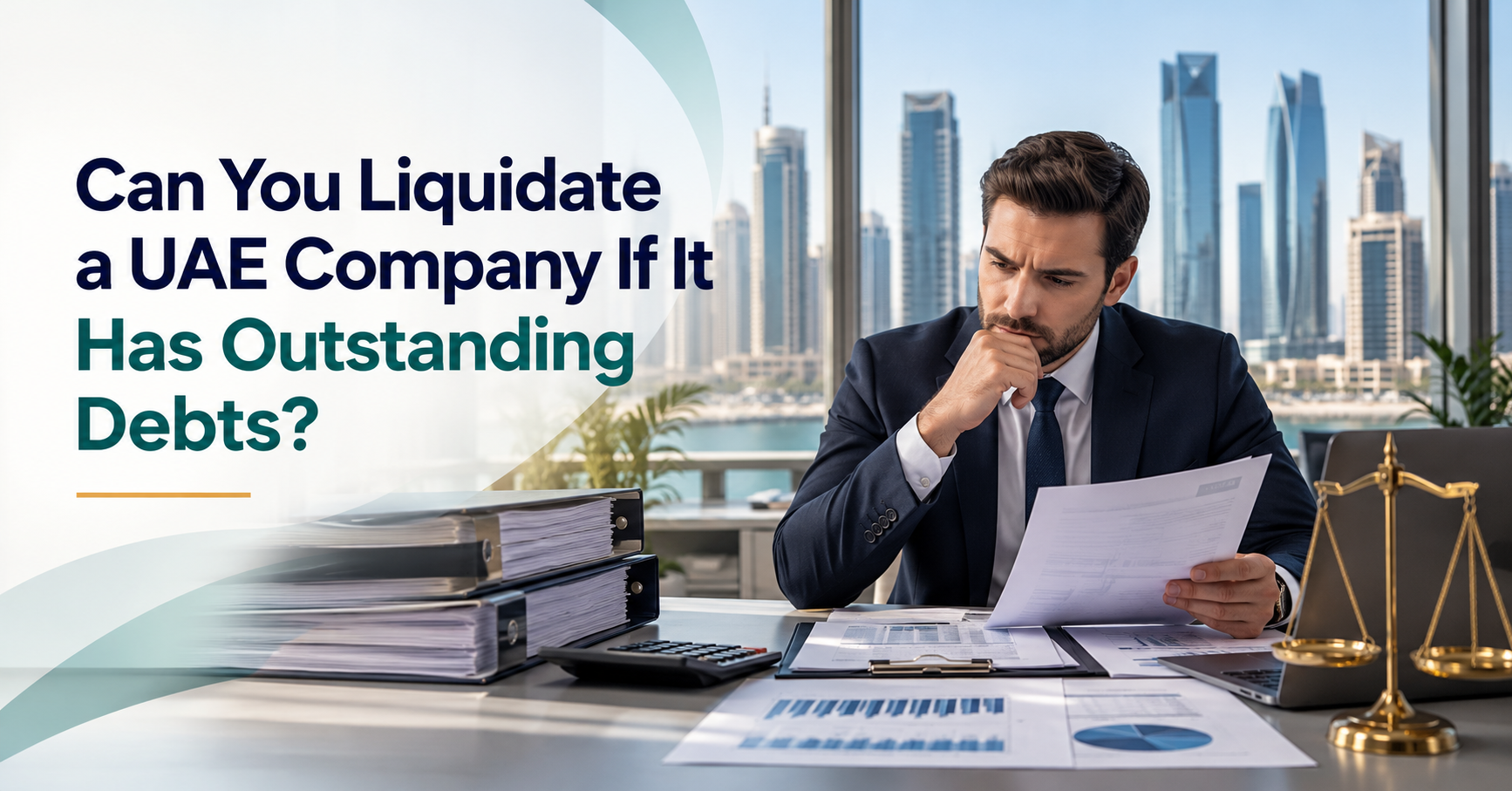
Can You Liquidate a UAE Company If It Has Outstanding Debts?
If you’re planning a company liquidation in the UAE, you may be wondering whether you can close your business if it still has outstanding debts. Many companies face financial obligations such as unpaid supplier invoices, bank loans, employee dues, rent, or outstanding government fees when they decide to shut down.
The good news is that having outstanding debts does not automatically prevent a company from entering liquidation. However, the process depends on the company’s financial position, legal structure, jurisdiction, and ability to meet its obligations.
This guide explains whether you can liquidate a UAE company with outstanding debts, what happens to unpaid liabilities, and what business owners should know before starting the liquidation process.
Can You Liquidate a UAE Company With Outstanding Debts?
Yes, a UAE company may be able to enter liquidation even if it has outstanding debts. However, the procedure depends on whether the company can pay its creditors and whether it is considered solvent or insolvent.
If the company has sufficient funds or assets to settle its liabilities, it may be possible to complete a voluntary liquidation after meeting the applicable legal and regulatory requirements.
If the company cannot pay its debts when they become due, the situation may require a different process under the applicable UAE insolvency or bankruptcy framework.
It is important to understand that liquidation does not automatically eliminate outstanding debts. The company’s liabilities must be addressed through the appropriate legal process.
Why Outstanding Debts Matter During Company Liquidation
Outstanding debts can affect the timeline, documentation, and legal procedures involved in closing a company.
Before proceeding with liquidation, business owners should review their financial position and identify all outstanding obligations.
These may include:
Unpaid supplier invoices
Outstanding bank loans or business financing
Employee salaries, end-of-service benefits, and other dues
Unpaid office rent and utility bills
Government fees and penalties
Free zone or licensing authority charges
Outstanding VAT and Corporate Tax liabilities
Payments owed to business partners or other creditors
Identifying these obligations early can help determine the appropriate liquidation route and reduce the risk of disputes or delays.
Step 1: Review Your Company’s Financial Position
Before starting the liquidation process, assess the company’s financial position to determine whether it can meet its outstanding obligations.
Review the company’s available cash, bank balances, assets, liabilities, and unpaid invoices.
This assessment should help establish:
The total amount of outstanding debt
The funds available to settle liabilities
The value of assets that may be sold to generate funds
The amount owed to employees, suppliers, banks, and government authorities
Whether the company can pay its debts as they fall due
A clear financial assessment can help determine whether a solvent voluntary liquidation is appropriate or whether professional insolvency advice is needed.
Step 2: Identify and Inform Your Creditors
Creditors are individuals, banks, businesses, or other parties to whom the company owes money.
During liquidation, the company should identify its creditors and determine the amount owed to each party.
Depending on the applicable procedure, creditors may need to receive formal notification or be given an opportunity to submit their claims.
Common creditors may include:
Banks and financial institutions
Suppliers and service providers
Landlords
Employees
Government authorities
Other businesses or individuals with valid claims
Maintaining accurate records of outstanding debts can help the liquidator assess the company’s liabilities and manage creditor claims in accordance with the applicable legal requirements.
Step 3: Determine Whether the Company Is Solvent or Insolvent
One of the most important steps is determining whether the company can settle its debts.
Solvent Company
A company is generally considered solvent when it can meet its financial obligations as they become due and has sufficient resources to settle its liabilities.
If your company has outstanding debts but can pay them using available funds or proceeds from its assets, a voluntary liquidation may be possible.
The company must still follow the relevant authority’s requirements and complete the necessary legal, financial, and administrative procedures.
Insolvent Company
A company may face insolvency issues if it cannot pay its debts when they become due or its financial position meets the applicable legal criteria for insolvency.
In such cases, the company may need to follow the relevant UAE insolvency or bankruptcy procedures rather than treating the closure as a routine voluntary liquidation.
Important: A company should not distribute its remaining assets to shareholders or transfer assets to avoid paying creditors. Such actions may create legal risks, particularly where insolvency is involved.
Step 4: Appoint a Liquidator Where Required
Depending on the company’s legal structure, jurisdiction, and liquidation procedure, appointing a licensed or approved liquidator may be necessary.
A liquidator helps manage the company’s closure and deal with its financial affairs in accordance with the applicable requirements.
The liquidator’s responsibilities may include:
Reviewing the company’s financial records
Identifying assets and outstanding liabilities
Assessing creditor claims
Managing the sale or realization of company assets where appropriate
Applying available funds toward liabilities in the legally required order
Preparing liquidation reports and other required documents
Coordinating with the relevant authorities
Completing the required closure formalities
The appointment process and the liquidator’s responsibilities can vary between mainland jurisdictions and individual free zones.
Step 5: Settle Outstanding Debts and Liabilities
If the company has sufficient funds or realizable assets, its outstanding liabilities should be addressed through the appropriate liquidation process.
Depending on the company’s circumstances, this may involve:
Paying employee salaries and other employment-related entitlements
Settling supplier invoices
Resolving outstanding rent and utility payments
Paying applicable government and licensing fees
Addressing outstanding tax liabilities
Repaying secured or unsecured creditors in accordance with the applicable legal priority rules
If the company does not have enough funds to pay every creditor in full, the situation requires careful handling under the relevant insolvency framework.
Creditors may not all receive full payment, and the distribution of available assets must follow the applicable legal rules.
Business owners should avoid making informal payment arrangements or prioritizing certain creditors without first understanding the company’s legal position.
Step 6: Address Employee Dues and Visa Cancellations
Outstanding employee obligations can complicate company liquidation.
Before completing the closure process, the company should review all employee-related liabilities, including:
Unpaid salaries
End-of-service benefits, where applicable
Unused annual leave payments, where applicable
Other contractual or statutory employment entitlements
Outstanding work permit and employment-related fees
Employee work permits, residence visas, and relevant immigration records may also need to be cancelled through the appropriate authorities.
If the company cannot meet its employee obligations, it should seek professional legal advice about the correct procedure rather than assuming that liquidation automatically removes these responsibilities.
Step 7: Review VAT and Corporate Tax Obligations
Outstanding tax liabilities must also be considered when closing a UAE company.
If the company is registered with the Federal Tax Authority, it should review its tax position before completing the liquidation process.
This may include:
Filing outstanding VAT returns
Paying applicable VAT liabilities
Reviewing Corporate Tax filing requirements
Settling outstanding tax amounts and applicable penalties
Applying for VAT deregistration where required
Completing Corporate Tax deregistration requirements where applicable
Maintaining the required financial and tax records
Closing a trade licence does not automatically cancel all tax obligations.
If the company has unpaid taxes or outstanding tax returns, it should establish what needs to be completed with the relevant authorities and obtain professional tax advice where necessary.
Step 8: Understand the Difference Between Mainland and Free Zone Liquidation
The process for liquidating a company with outstanding debts can vary depending on where the business is registered.
Mainland Company
For a mainland company, the closure process generally involves the relevant emirate’s economic authority and other applicable government departments.
Depending on the legal structure and financial circumstances, requirements may include:
Appointing a liquidator
Preparing financial statements or liquidation reports
Notifying creditors
Obtaining the required clearances
Addressing employee and immigration obligations
Resolving outstanding government fees and taxes
Following the applicable insolvency procedures if the company cannot pay its debts
The exact requirements depend on the company’s legal form and the applicable UAE legislation.
Free Zone Company
For a free zone company, the process is handled through the relevant Free Zone Authority, subject to the applicable legal framework.
Requirements may include:
Submitting a company closure application
Obtaining shareholder approval
Appointing a liquidator where required
Providing financial and liquidation documents
Addressing outstanding free zone fees
Cancelling employee and immigration records
Resolving tax and creditor obligations
Each free zone may have its own administrative procedures and documentation requirements. However, free zone registration does not automatically exempt a company from applicable creditor rights or insolvency obligations.
What Happens If Your Company Cannot Pay Its Debts?
If your company has insufficient funds to settle its outstanding liabilities, you should not assume that you can simply cancel the trade licence and walk away from the business.
Depending on the company’s circumstances, the appropriate course of action may involve formal insolvency or bankruptcy procedures under the applicable UAE legal framework.
The process may require a detailed review of the company’s financial position, creditor claims, available assets, and legal obligations.
It is also important to understand that the consequences of unpaid company debts depend on the legal structure of the business, any personal guarantees or security arrangements, the nature of the liabilities, and the applicable law.
Company liquidation does not automatically make shareholders or directors personally responsible for every company debt. Equally, it does not guarantee that they will never face personal liability. Personal guarantees, misconduct, breaches of legal duties, or other circumstances may create additional exposure.
If your company is unable to pay its creditors, obtain advice from a qualified UAE insolvency or legal professional before taking further action.
Common Mistakes to Avoid When Liquidating a Company With Debts
Closing a company with outstanding liabilities requires careful planning. Avoid these common mistakes:
Assuming that liquidation automatically cancels unpaid debts
Cancelling the trade licence without addressing the applicable closure requirements
Ignoring creditor claims or failing to maintain accurate debt records
Transferring company assets to avoid paying creditors
Distributing remaining funds to shareholders before addressing liabilities
Leaving employee salaries or end-of-service benefits unpaid without following the applicable legal process
Ignoring VAT, Corporate Tax, or outstanding government obligations
Assuming that mainland and free zone companies follow identical procedures
Failing to seek insolvency advice when the company cannot pay its debts
Taking the correct steps from the beginning can help reduce unnecessary delays, disputes, and potential legal complications.
Benefits of Professional Company Liquidation Assistance
Working with experienced company liquidation consultants in Dubai can help you understand the appropriate closure process and identify the requirements that apply to your business.
Professional assistance may help you:
Assess the company’s outstanding liabilities
Understand the applicable liquidation procedure
Prepare the required documentation
Coordinate with the relevant licensing authority
Arrange liquidator services where required
Review tax and regulatory obligations
Manage employee and visa cancellation procedures
Understand the steps required to address creditor claims
Identify when specialist insolvency or legal advice is necessary
Professional guidance can be particularly valuable when a company has multiple creditors, unpaid employee dues, outstanding tax liabilities, bank financing, or insufficient funds to settle its obligations.
Conclusion
Yes, you may be able to liquidate a UAE company even if it has outstanding debts, but the correct procedure depends on the company’s financial position and legal circumstances.
If the company can meet its liabilities, it may be possible to proceed with a voluntary liquidation after completing the applicable requirements. If the company cannot pay its debts, formal insolvency or bankruptcy procedures may need to be considered.
Before starting the process, review your financial records, identify your creditors, address employee and tax obligations, and confirm the requirements of your mainland or free zone authority.
If you’re planning to close a business in Dubai or elsewhere in the UAE, professional company liquidation assistance can help you understand the available options and manage the closure process in an organized and compliant manner.